


Finders Keepers

When King Charles and Queen Camilla came across the pond to grace us with their presence. But Zohran Mamdani, the new mayor of New York City, was not impressed. When asked what he would say to King Charles, Mamdani voiced encouragement to return the Koh-i-Noor diamond.
Of course, he didn’t actually do that when he interacted with King Charles. Mamdani seems like a nice guy. But I wouldn’t have blamed him if he did. I’m curious what King Charles would say. Because the very beautiful, and very large, stolen diamond is just one of the many common crimes of colonialism.
Koh-i-Noor Diamond
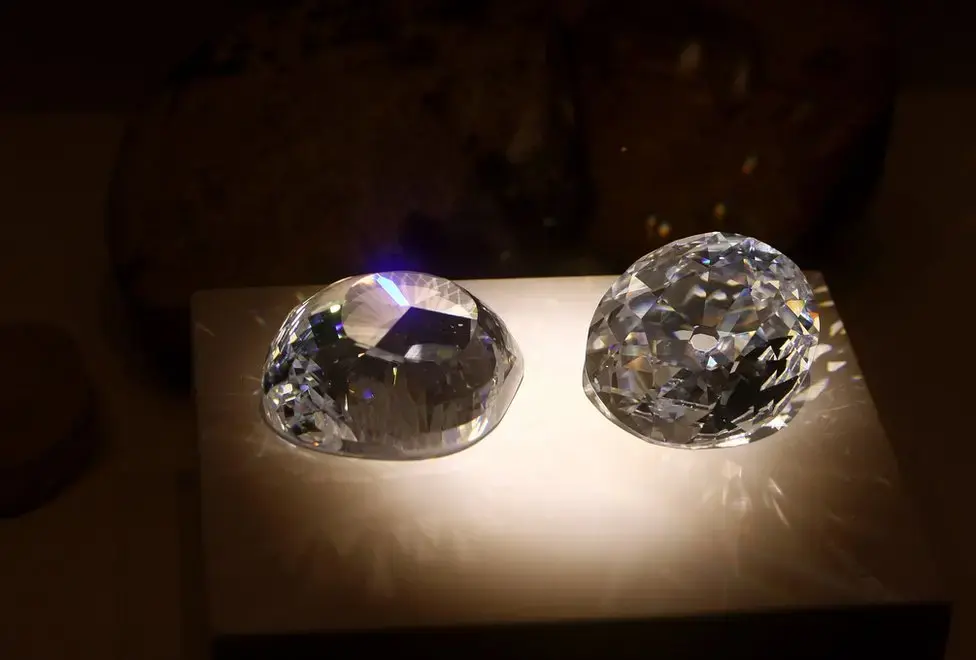
The diamond in question is a massive, gorgeous, brilliantly cut diamond that was, until very recently, the centerpiece of the Queen’s crown. The Queen of England. One of the largest diamonds in the entire world, it’s 105 carats and on display at the Tower of London. With a name like Koh-i-Noor, obviously the diamond is not native to Britain. Oh no, my friends, that diamond is from exotic India, where the British …. um, obtained it during the colonial era.

Koh-i-Noor is an Urdu word meaning “mountain of light.” Never heard of Urdu? Neither had I. Turns out it’s spoken in India and Pakistan. It’s an old Persian language. The diamond has quite the long and intriguing history. Supposedly, the gem is only supposed to be worn by a queen. Legend has it that it only brings bad luck to men. It was given to Queen Victoria in 1850. When she died, the Koh-i-Noor became part of the British Crown Jewels. It was even in her will that the Koh-i-Noor should only be worn by a female queen.
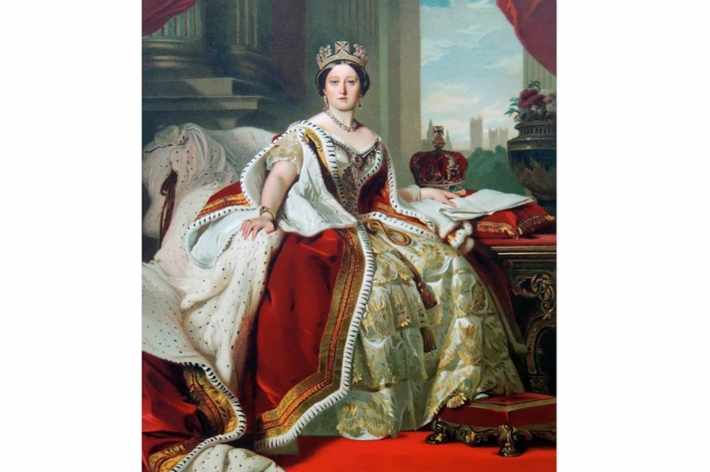
India, unsurprisingly, wanted their diamond back, saying its return would “atone for Britain’s colonial past.” Unfortunately, that seems incredibly unlikely.
Not Stolen
You could certainly make the case that the diamond was not stolen. Or that if the British stole it from India, the Indians stole it from the Afghans, who in turn stole it from the Persians. In fact, there are four countries who currently say the Koh-i-Noor belongs to them – India, Pakistan, Afghanistan, and Iran.

Does India’s claim have the most merit because it’s the most recent? India has wanted the gem back ever since it gained independence from the United Kingdom in 1947. In 1976, the British government officially refused to give India the diamond, saying it was obtained legally under the terms of a treaty between the two countries.
Treaties are pretty interesting. Any student of history knows that sometimes they’re followed…… and sometimes not. Ask the Native Americans of this country if they feel the United States has always honored its treaties.
So what were the circumstances of this particular treaty?
The British in India
What were the British doing in India anyway? The short answer is that they wanted what India had – spices and silk. They were merchants who wanted to make money. And they had a good gig going while they traded with them for about 200 years, from the 1600’s on. But when the 1800’s came along, they saw an opportunity to be more than trading partners. They saw a very enticing opportunity to rule.
India’s powerful maharajah, Ranjit Singh, nicknamed the Lion of Punjab, had just died. That meant all of India was ruled by his five-year-old son, Duleep Singh. Why be a mere trading partner when you could rule the whole country? So the British bided their time, pretending to be friends with a child king while they built up their troop presence. After they took away his mother and locked her in a tower, they told him to sign over his kingdom and the diamond, and he could go live in England, where he would be “protected.” He was only 10 or 11 years old when this happened, and not surprisingly, he willingly complied.

So yes, there’s a treaty. It was signed by a child. I’m not sure I think it’s particularly valid, but that’s what the British are hanging their hat on. Even Queen Victoria felt guilty about how he had been treated, confiding to her journal that she felt sorry for for the “deposed Indian prince.” It was her who set him up in England, with an allowance and an estate. She wouldn’t even wear the diamond until he told her it would be ok. Although he did that in 1854, later in life he had his regrets.

An Indian in England
Duleep sailed to England when he was 15 years old. The British, of course, wanted him to become as English and Christian as possible. His culture was treated as a prop. His estate was styled like a Mughal palace. It had peacocks, parrots, monkeys, leopards, and cheetahs. He eventually married and had six children. But Duleep never learned how to manage his allowance and was always in debt. He was also perpetually unfaithful to his wife, and had several known illegitimate children. Duleep tried to learn about his family, his culture, his religion, and his country, but was always rebuffed by his many British handlers. He was only allowed to visit India twice, once to visit his mother and a final time to have her body cremated.
The British were afraid that Duleep, being the living, legitimate heir of the Lion of the Punjab, posed a real threat of revolution should he ever return to India for any length of time. Valid. Duleep died in Paris at age 55. The British refused his request to be buried in his home country of India.
Alfred and the Diamond
After what they did to get the diamond, you’d think the Brits would be excited to show it off. And so they were. It was displayed with great fanfare at the Great Exhibition in London in 1851. The Exhibition was officially called the “Great Exhibition of the Works of Industry of All Nations.” It was a sort of World’s Fair, and a chance for the British to show off their world dominance in technology and industry. Indeed, visitors were meant to leave the Exhibition being absolutely convinced of British superiority.
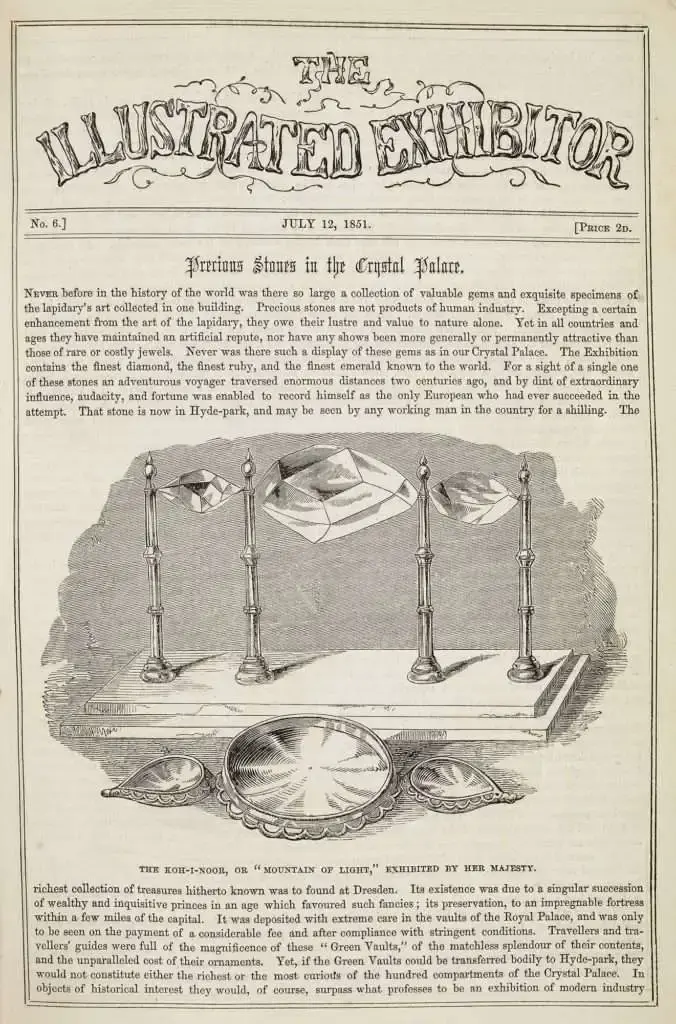
That’s why it was such a tragedy when the beautiful Koh-i-Noor, on display at the Exhibition, received feedback that was rather …. underwhelming. People said it didn’t look like a diamond at all, just a big piece of glass. And it seemed small. People were disappointed. Prince Albert, Queen Victoria’s husband, stepped in to save the day. As one of the main organizers of the Exhibition, he felt a responsibility to show the people of England that the Koh-i-Noor was indeed worthy of their admiration. And honestly, it may have been a cultural misunderstanding. In India, diamonds were valued differently. The Brits were clearly expecting something shiny. So it was cut down, from 190 carats to 108. Sad to lose all that diamond weight, but it’s definitely sparklier.
Crown Jewels
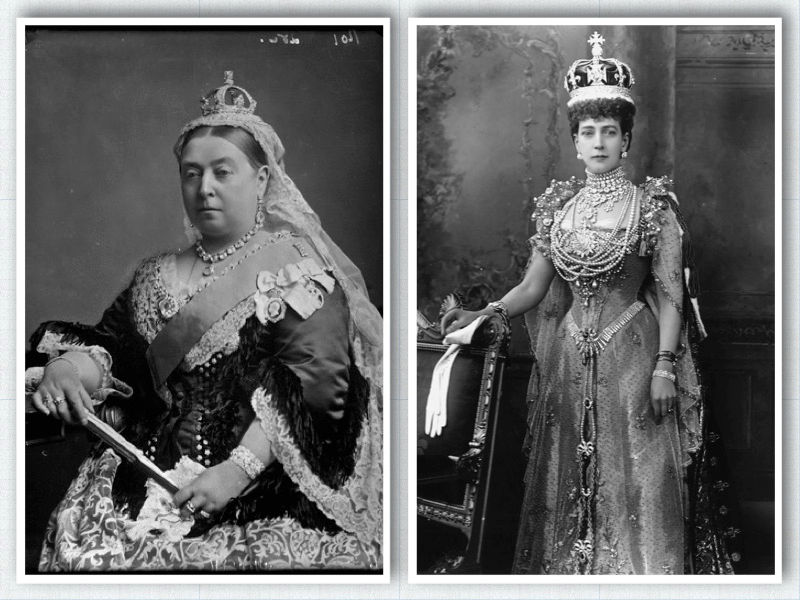
After the Exhibition and the cutting, the best way to display the new, more beautiful Koh-i-Noor was to have it be part of the British Crown Jewels. So while Queen Victoria typically wore the stone as a brooch, after she died, it was set in the crown of Queen Alexandra, who wore it during the 1902 coronation of her husband Edward VII. The next lucky person to wear it was Queen Mary, wife of King George V, when she wore it for her own coronation in 1911. Both the former and current Queen have worn the Koh-i-Noor. Now you can visit it yourself if you happen to stop by the Tower of London.
Who is the rightful owner?
Like I said earlier, I doubt this diamond will be leaving anytime soon. But it’s clear to me the British took it. And I get it, kind of…. In war, lots of things get taken. And in war, there’s lots of sad stories like Duleep’s. So what to do? Should the diamond be returned to India? What if I told you Duleep’s family only owned the diamond for about 40 years before the British took it? Would that change your mind? They got it from the Afghan Empire, who in turn got it from the Persians. If you truly want to right a wrong, how far back should you go? It gets messy to try and answer that question.
The 2010 UK Prime Minister David Cameron admitted the diamond’s sordid history, but said ”If you say yes to one, you suddenly find the British Museum would be empty. I am afraid to say, it is going to have to stay put."
In fact, in 2016, the Indian government told the Supreme Court that the Koh‑i‑Noor was "neither stolen nor forcibly taken" and had been ceded or gifted to the British under historical agreements. How very interesting.
And yet, the Koh-i-Noor was absent for very recent coronation of King Charles III. Instead, it’s now in an exhibition as a "symbol of conquest." I wonder why that was.
My hope is going forward, the British are just a lot more honest about how they got the gem. It’s long past time for them to tell the whole truth.


Comments